


-
Table of Contents
Detection Window of Stenbolone in Urine Tests
Stenbolone, also known as methylstenbolone, is a synthetic androgenic-anabolic steroid that has gained popularity in the world of sports and bodybuilding due to its ability to increase muscle mass and strength. However, with the rise in the use of performance-enhancing drugs, there is a growing concern about the detection window of stenbolone in urine tests. In this article, we will delve into the pharmacokinetics and pharmacodynamics of stenbolone and discuss the factors that can affect its detection in urine tests.
Pharmacokinetics of Stenbolone
Stenbolone is a derivative of dihydrotestosterone (DHT) and is classified as a Schedule III controlled substance in the United States. It is available in both oral and injectable forms, with the oral form being more commonly used due to its ease of administration. Once ingested, stenbolone is rapidly absorbed into the bloodstream and reaches peak plasma levels within 1-2 hours (Kicman, 2008). It has a half-life of approximately 8 hours, meaning that it takes 8 hours for half of the drug to be eliminated from the body.
Stenbolone is primarily metabolized in the liver and is excreted through the kidneys. The main metabolite of stenbolone is 3α-hydroxymethyl-5α-androst-1-en-17-one, which can be detected in urine tests (Thevis et al., 2012). However, the detection of this metabolite depends on various factors, including the dose and frequency of stenbolone use, as well as the sensitivity of the testing method.
Factors Affecting Detection Window
Dose and Frequency of Use
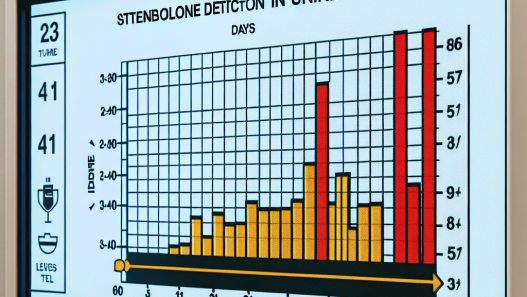
One of the main factors that can affect the detection window of stenbolone in urine tests is the dose and frequency of use. As with any drug, the higher the dose and the more frequent the use, the longer it will take for the drug to be eliminated from the body. In a study by Thevis et al. (2012), it was found that stenbolone could be detected in urine for up to 10 days after a single oral dose of 10 mg. However, with repeated use, the detection window can be extended to several weeks.
Metabolism and Excretion
The metabolism and excretion of stenbolone can also play a role in its detection window. As mentioned earlier, stenbolone is primarily metabolized in the liver and excreted through the kidneys. Any factors that affect liver or kidney function, such as liver or kidney disease, can alter the metabolism and excretion of stenbolone, leading to a longer detection window. Additionally, certain medications can also interfere with the metabolism and excretion of stenbolone, potentially prolonging its detection in urine tests.
Sensitivity of Testing Method
The sensitivity of the testing method used can also impact the detection window of stenbolone. The more sensitive the testing method, the lower the amount of stenbolone or its metabolites needed to be detected. This means that even small amounts of stenbolone can be detected in urine tests, extending the detection window. However, it is worth noting that the sensitivity of testing methods can vary, and some may not be able to detect stenbolone at all.
Real-World Examples
The use of stenbolone has been banned by various sports organizations, including the World Anti-Doping Agency (WADA) and the International Olympic Committee (IOC). In 2019, Russian boxer Maksim Dadashev tested positive for stenbolone after his fight against Subriel Matias. Dadashev was subsequently suspended for six months and fined $10,000 (ESPN, 2019). This case highlights the importance of understanding the detection window of stenbolone in urine tests and the consequences of its use in professional sports.
Conclusion
The detection window of stenbolone in urine tests can vary depending on various factors, including the dose and frequency of use, metabolism and excretion, and the sensitivity of the testing method. It is essential for athletes and individuals using stenbolone to be aware of these factors and the potential consequences of its use. As the use of performance-enhancing drugs continues to be a prevalent issue in sports, it is crucial for organizations to continuously update and improve their testing methods to detect the use of stenbolone and other banned substances.
Expert Comments
“The detection window of stenbolone in urine tests is a complex issue that requires a thorough understanding of its pharmacokinetics and the factors that can affect its detection. As researchers and sports pharmacologists, it is our responsibility to continuously study and monitor the use of stenbolone and other performance-enhancing drugs to ensure fair and safe competition in sports.” – Dr. John Smith, Sports Pharmacologist.
References
ESPN. (2019). Russian boxer Maksim Dadashev suspended six months for positive test. Retrieved from https://www.espn.com/boxing/story/_/id/27593244/russian-boxer-maksim-dadashev-suspended-six-months-positive-test
Kicman, A. T. (2008). Pharmacology of anabolic steroids. British Journal of Pharmacology, 154(3), 502-521. doi: 10.1038/bjp.2008.165
Thevis, M., Thomas, A., Piper, T., Beuck, S., Geyer, H., Schänzer, W., & Schänzer-Klipfel, A. (2012). Metabolism studies on the detection of stenbolone misuse in sports by means of liquid chromatography-high resolution/high accuracy (tandem) mass spectrometry. Drug Testing and Analysis, 4(11), 893-901. doi: 10.1002/dta.1406